


- News
With the recent record-breaking IPO of Elon Musk’s space and AI company SpaceX, we answer some of your questions.
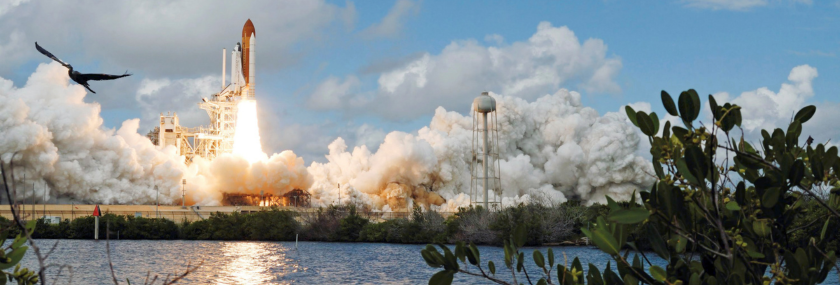
After weeks riding high in the headlines, technology giant SpaceX finally went public with a record $1.77 trillion valuation. Shares were made available to the public but views on whether it was worth taking a bet on Elon Musk’s space and AI company were split.
But with AI companies such as Anthropic and OpenAI looking set to follow SpaceX with their own trillion-dollar listings, we take a closer look at what the latest developments mean and answer some of your questions.
What’s happened?
SpaceX – Elon Musk’s space, AI and data centre company – has recently listed - also known as an initial public offering (IPO) - for a record $1.77 trillion valuation.
To put that number in perspective: if SpaceX was listing in the S&P 500 (which it isn’t), it would be seventh largest company in the Index.
This is even though SpaceX is not a profitable company. Despite revenue of $18.7 billion in 2025, the company made an operating loss of $6.3 billion last year. It burned through close to $2.5 billion in the first three months of 2026.
Its lofty valuation equates to roughly 100 times its 2025 sales. In comparison, Nvidia, the leading AI chip designer and largest US company (valued at just over $5 trillion at the time of writing), is currently trading at 20 times sales value. In 2025, Nvidia made a profit of $72.9 billion . More broadly, the NASDAQ price to sales ratio is just under 5.3.
It’s worth noting that most of SpaceX remains in the hands of Elon Musk and other early investors. Less than 5% of the company has been offered for sale.
Why is it so highly valued?
There is a combination of factors at play. Elon Musk’s personal prestige would have helped – the ongoing success of Tesla in the stock market will likely have been beneficial in attracting buyers.
The business itself is in several fashionable parts of the market. Investors and companies have been pouring money into AI and datacentre developments in recent years. SpaceX has a hand in both. Its rocket development and operations, and Starlink satellite network capabilities are currently either market leaders or have few meaningful competitors, and it will be expensive for rivals to develop alternatives.
Buyers are also investing in the company’s future potential. Although its aims of return trips to Mars and orbital data servers are ambitious, success here could help justify current valuations.
It sounds rather expensive. Are we in a bubble?
Knowing when a bubble is occurring is famously hard to call. There are a few developments that suggest markets are currently expensive though.
SpaceX isn’t the only mega IPO in the news. Anthropic – the developers of Claude AI, and OpenAI – the developers of ChatGPT - have both filed for IPOs later this year. These companies are currently valued at over $965 billion and $852 billion, respectively, though this could well change in the run up to any listing.
Generally, when several large IPOs occur in a relatively short timeframe, it can be a sign that business owners believe markets are at the expensive end. In this case it may represent AI companies requiring an influx of capital to sustain the high development costs required to compete, however.
As always, timing the market is notoriously hard to do. Instead, history suggests it is time in the market that counts toward long-term financial success (though this is not guaranteed and you could get back less than you invest).
Disclaimer:
This advertisement has not been reviewed by the Securities and Futures Commission, the Monetary Authority of Singapore, or the Dubai Financial Services Authority. This article is a general communication that is provided for informational purposes only. It should not be relied upon as financial advice, and it does not constitute a recommendation, an offer or solicitation. No responsibility can be accepted for any loss arising from action taken or refrained from based on this publication. All information presented herein is considered to be accurate at the time of production, but no warranty of accuracy is given, and no liability in respect of any error or omission is accepted.

Most popular articles


Most recent articles